
A routine drive can change quickly when a warning light appears, a tire fails, or a vehicle suddenly loses power. In Cle Elum, those problems can be especially stressful when they happen along I-90, on a less-traveled road, or during changing mountain weather. Knowing when to request Cle Elum towing can help drivers protect their vehicles, avoid additional mechanical damage, and get out of potentially dangerous roadside situations. Some problems can be handled with roadside assistance, while others call for professional towing or recovery from the start.
Mechanical Breakdowns That Leave Vehicles Stranded
Engine and drivetrain problems are among the most straightforward reasons to request a tow. A vehicle may overheat, lose power, develop transmission trouble, or experience an electrical failure that makes continued driving unsafe.
Overheating deserves particular caution. A rising temperature gauge, coolant warning, steam, or a strong coolant smell can indicate a problem that should not be ignored. Driving farther in hopes of reaching a repair shop can turn a cooling-system issue into significant engine damage.
Transmission symptoms can be equally concerning. Slipping, grinding, difficulty shifting, or a vehicle that will not engage a gear may require immediate transportation rather than another attempt to drive.
When a mechanical problem makes a vehicle unreliable or unsafe, emergency towing services can provide transportation to a repair facility without placing additional stress on compromised components.
I-90 Breakdowns Require Quick Decisions
Cle Elum’s location along I-90 means towing calls are not limited to local drivers. People traveling between Central and Western Washington may encounter trouble while passing through the area, sometimes far from their usual mechanic or dealership.
A breakdown on an interstate creates different concerns than one in a driveway or parking lot. Traffic speed, shoulder width, visibility, and weather can all affect roadside safety. Drivers should move as far away from active traffic as safely possible, activate hazard lights, and avoid standing close to moving vehicles.
Trying to diagnose a complicated mechanical problem beside interstate traffic is rarely a good strategy. If a vehicle cannot be operated safely, arranging professional transportation allows the mechanical diagnosis to happen somewhere more appropriate.
Flat Tires and Wheel Problems
 A flat tire does not automatically mean a vehicle needs to be towed. When a usable spare is available and conditions allow safe roadside service, tire assistance may be enough to get the driver moving again.
The situation changes when there is no suitable spare, multiple tires are damaged, a wheel is compromised, or suspension components have been affected. A severe pothole impact or road-debris strike can cause more than visible tire damage. Bent wheels, alignment problems, or damaged suspension components may make driving unsafe even after the immediate tire problem is identified.
Professional roadside assistance in Cle Elum can help determine whether a manageable roadside problem can be resolved where the vehicle sits or transportation is the safer next step.
Dead Batteries and Charging-System Failures
Cold temperatures can expose a weak battery, but the battery itself is not always the underlying problem. A jump-start may restore power when a battery has simply discharged. It will not solve an alternator or charging-system failure.
Watch what happens after the vehicle starts. If warning lights remain illuminated, electrical accessories behave abnormally, or the engine dies again shortly afterward, the charging system may not be supplying adequate power.
Repeated jump-start attempts are not a substitute for diagnosis. When a vehicle cannot remain running reliably, towing it to a repair facility can prevent the driver from becoming stranded again a few miles down the road.
Snow, Ice, and Changing Mountain Conditions
Travel near Cle Elum can involve conditions that differ considerably from those drivers experienced earlier in their trip. Snow, ice, freezing temperatures, and reduced visibility can complicate both mechanical problems and minor driving mistakes.
A vehicle that slides from the roadway may require recovery even when it has little or no visible damage. The angle of the vehicle, surface conditions, surrounding obstacles, and accessibility determine how it should be repositioned.
Attempting to force a stuck vehicle back onto the roadway can cause tire, drivetrain, undercarriage, or suspension damage. When a vehicle is off-road or cannot regain traction safely, vehicle recovery services may be more appropriate than repeatedly spinning the tires or trying to drive out.
Roadside Assistance or Towing?
The best service depends on what happened and whether the vehicle can safely return to the road.
Roadside assistance is generally suited to problems that can be corrected safely at the vehicle’s location. A discharged battery, certain tire problems, or another relatively minor issue may fall into this category.
Towing is appropriate when the vehicle cannot be safely driven, requires mechanical diagnosis, has significant damage, or cannot be repaired at the roadside. Recovery may be required when the vehicle is stuck, off the roadway, or positioned in a way that prevents normal loading.
Drivers do not need to diagnose the entire problem before calling. Explaining what happened, what the vehicle is doing now, and where it is located gives the towing provider useful information for determining the appropriate response.
Frequently Asked Questions
When should I call for towing instead of roadside assistance?
Towing is generally appropriate when a vehicle cannot be driven safely, has significant mechanical or collision damage, will not remain running, or needs professional diagnosis at a repair facility. Minor problems that can be safely corrected roadside may only require roadside assistance.
Can I request towing if I break down on I-90 near Cle Elum?
Yes. When calling, provide your direction of travel, approximate location, nearby exit or mile marker if known, vehicle information, and a description of the problem so the towing provider can prepare for the situation.
Does a vehicle stuck in snow always need to be towed?
Not necessarily. However, a vehicle that has left the roadway, cannot regain traction safely, or is positioned where attempting to drive out could cause damage may require professional recovery.
Can a vehicle need towing even if it still runs?
Yes. Overheating, transmission trouble, steering problems, damaged wheels, fluid leaks, and collision damage can make continued driving unsafe even when the engine still runs.
Accidents and Vehicle Damage
Even a vehicle that appears drivable after a collision may have hidden damage. Steering, suspension, cooling-system, wheel, and structural problems are not always obvious during a quick roadside inspection.
Pay attention to how the vehicle sits and responds. A wheel positioned at an unusual angle, leaking fluid, rubbing tire, damaged steering, or warning light can indicate that driving away would be risky.
Collision scenes may also require more complicated recovery when a vehicle has left the pavement or sustained damage that prevents its wheels from rolling normally. In these circumstances, the towing company needs accurate information about the vehicle and its condition before arriving.
Larger Vehicles Need the Right Recovery Equipment
Not every towing call involves a passenger car. Commercial trucks, work vehicles, RVs, and other larger vehicles can experience the same mechanical and weather-related problems, but their weight and configuration may require different equipment.
That distinction matters around Cle Elum because I-90 carries substantial commercial and recreational traffic. Dispatching equipment that matches the disabled vehicle helps make recovery safer and more efficient.
When calling about a larger vehicle, provide its type, approximate size, condition, and whether it is carrying a trailer. Situations involving substantial weight or difficult positioning may require heavy-duty towing and recovery rather than equipment intended for standard passenger vehicles.
What to Tell the Towing Company
Accurate information can make a towing call much smoother. Start with your location, including the roadway, direction of travel, nearby exit, intersection, business, or recognizable landmark. For interstate calls, knowing whether you are traveling eastbound or westbound is particularly helpful.
Describe the vehicle and what happened. Mention whether it starts, whether the wheels roll, and whether there is visible collision, tire, suspension, or undercarriage damage. Tell the dispatcher if the vehicle is in a ditch, blocking traffic, sitting on an incline, or located somewhere with limited access.
You should also have a destination in mind when possible. If you are traveling through the area rather than returning home, confirm that the repair facility or other destination can accept the vehicle.
Get Professional Towing Help in Cle Elum
Mechanical trouble, damaged tires, winter conditions, collisions, and unexpected electrical failures can leave a vehicle stranded with little warning. The safest response depends on the vehicle’s condition and its roadside location, but continuing to drive a compromised vehicle can create a much more expensive problem.
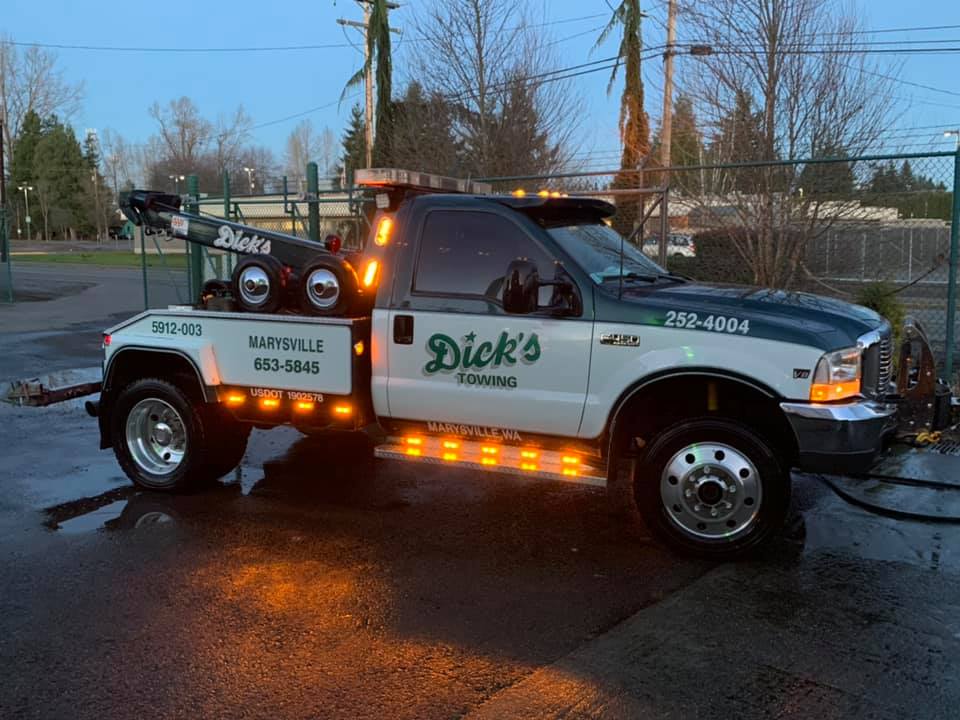
When you need Cle Elum towing because your vehicle cannot be driven safely, is stranded along I-90, has left the roadway, or requires professional recovery, contact Dick’s Towing. Call Dick’s Towing to request towing or roadside assistance and get the appropriate help for your situation.